Having curly hair is living in a constant love-hate relationship. One day your curls look like they were sculpted by angels, and the next, a shapeless cloud of frizz. As an expert in trichology (the science of hair) and an analyst of beauty products, I assure you that the difference between those two days is not the weather: it’s your routine and the ingredients you apply.
Curly hair is structurally different. Its elliptical shape and twists prevent the scalp’s natural sebum from traveling to the ends, making it intrinsically dry and fragile. This guide is not just a list of tips; it’s a proven system, supported by the most effective products currently on the market, designed to work with the biology of your curl, not against it.
PHASE 1: The Diagnosis (Before you buy, understand this)
The number one mistake I see in my consultations is buying products based on “how curly the hair is” (the famous system of numbers and letters like 3b or 4c). That’s useful for styling, but useless for health. What defines which products you need is Porosity.
Porosity: Your hair’s ability to absorb and retain water Imagine the cuticles of your hair like the shingles on a roof.
- Low Porosity (Shingles tightly closed): Water and products slide off and accumulate on the surface. It’s very hard to wet and takes hours to dry.
- Your strategy: You need heat to open the cuticle and lightweight, water-based products, not heavy butters.
- High Porosity (Shingles broken or very open): Hair absorbs water instantly like a sponge, but loses it just as quickly when drying, becoming dry and frizzy. It’s usually hair damaged by dyes or heat.
- Your strategy: You need proteins to repair the “holes” in the shingle and potent sealants (oils and butters) to trap hydration.
Expert Amazon Recommendation (The Universal Savior): Regardless of your porosity, if your hair is damaged, elastic, or breaking, you need to rebuild internal disulfide bonds. There is nothing on the market that beats this.
👉 [View on Amazon: Olaplex No. 3 Hair Perfector] Why it works: It’s not a conditioner, it’s a pre-wash treatment that repairs the internal structure of the hair at a molecular level. It’s the smartest investment to recover lost curls.
PHASE 2: The Wash Routine (The foundation of definition)
The goal here is to clean without stripping. Traditional supermarket shampoos contain sulfates (aggressive detergents like those in dishwasher soap) that brutally dry out the curl.
1. Smart Cleansing (Low-Poo or Co-Wash)
You must eliminate insoluble silicones and product buildup. If your hair is fine or wavy, use a sulfate-free shampoo (“Low-Poo”). If your hair is very dry and afro-type (type 4), opt for a cleansing conditioner (“Co-Wash”) most of the time.
Expert Amazon Recommendation (Perfect Balance): For a cleanse that deeply hydrates without weighing down, this line is pure gold thanks to Manuka honey and yogurt (gentle protein).
👉 [View on Amazon: SheaMoisture Manuka Honey & Yogurt Hydrate + Repair Shampoo] Why it works: It’s sulfate-free, cleans gently, and starts the repair and hydration process from the first step.
2. Deep Conditioning (The NEGOTIABLE step)
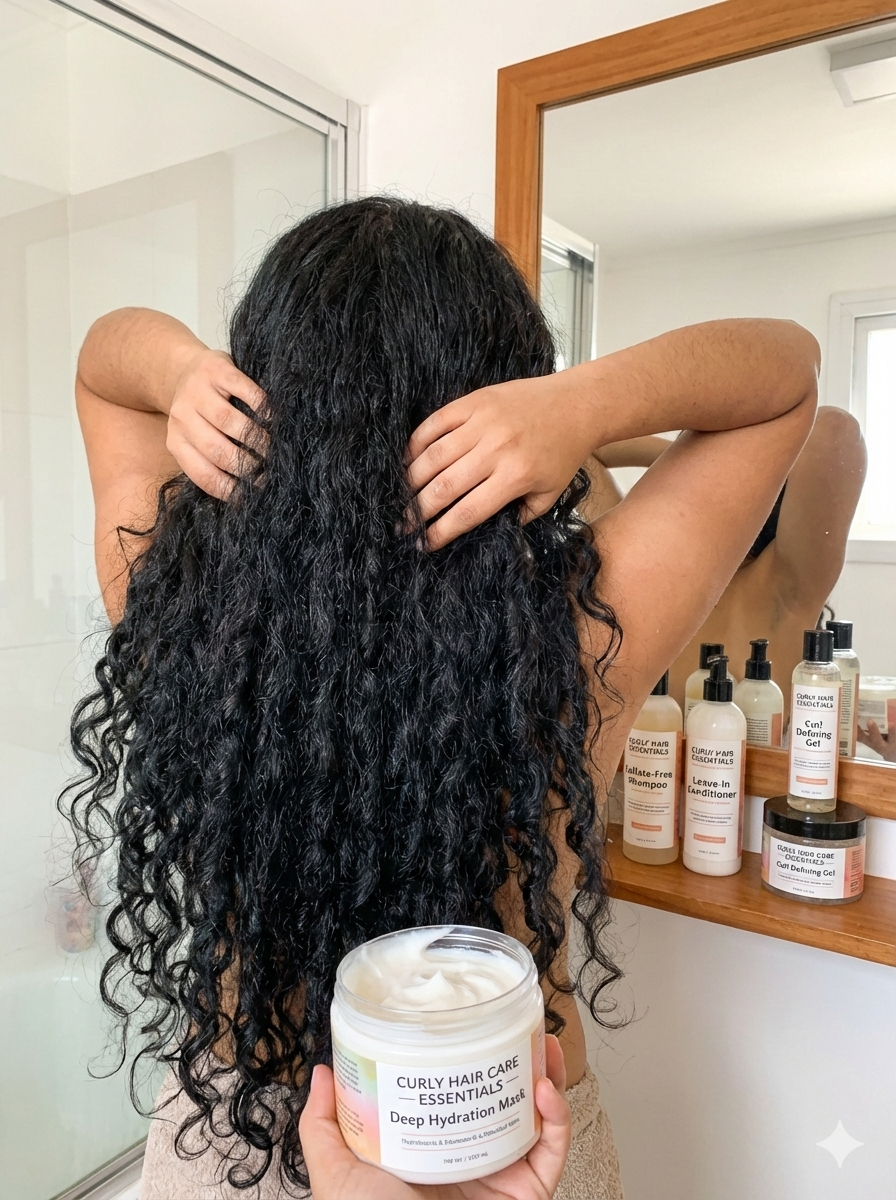
This is where the magic happens. Curly hair needs a deep mask at least once a week. You must apply it with soaking wet hair, detangle with your fingers or a wide-tooth comb, and let it act (ideally with a thermal cap if you are low porosity).
Expert Amazon Recommendation (The Viral Mask): This mask has broken the internet for a reason. It’s incredibly rich but penetrates deeply, providing hydration that lasts for days and incredible “slip” for detangling.
👉 [View on Amazon: Mielle Organics Babassu & Mint Deep Conditioner] Why it works: Babassu oil is highly penetrating and mint stimulates the scalp. It’s a “holy grail” for almost all curl types.
PHASE 3: The Art of Styling (Lasting definition)
You got out of the shower. Your hair is wet. What you do in the next 15 minutes will determine how your hair will look for the next 3 days.
The golden rule: Styling products are applied to WET (dripping) hair, not damp. Water is the vehicle that distributes the product and defines the initial curl.
The Layering System (LOC/LCO Technique)
You need a three-step system to trap that water inside the hair: Liquid (Liquid/Leave-in), Oil, Cream. Often, it’s simplified to Leave-in + Gel/Fixative.
Step 1: The Leave-In (No-rinse conditioner)
It’s the hydration base and the first shield against frizz.
Expert Amazon Recommendation (The King of Slip): If you struggle with knots and a lack of base hydration, this product is legendary in the curly community.
👉 [View on Amazon: Kinky-Curly Knot Today Leave In Detangler] Why it works: It’s botanical, light but powerful, and provides unmatched slip so your fingers or brush run through the hair without breaking it.
Step 2: Mechanical Definition (The secret tool)
You can use your fingers, but if you are looking for magazine curls, uniform and “ringlet” type, you need the tool that professionals use. Using a specific brush helps smooth the cuticle and encourage the hair to group into defined curls (“clumps”).
Expert Amazon Recommendation (The Essential Tool): It’s not just any brush. Its design of removable rows and rubber base creates perfect tension to “mold” the curl as if it were a gift ribbon.
👉 [View on Amazon: Denman Brush D3 (7 Row) Original Styler] Why it works: You pass the brush through wet sections (with leave-in applied) and twist your wrist slightly at the end. The result is almost architectural definition.
Step 3: The Fixative (Gel or Mousse)
The final and most feared step. “I don’t want my hair to be hard.” That’s the point!
You need a product that creates a hard crust (called “cast”) while the hair dries. This crust protects the curl from air and humidity while the shape sets. Once the hair is 100% dry, you break that crust by squeezing the hair upwards (“scrunch out the crunch” technique) with a little oil on your hands, revealing soft but defined curls.
Expert Amazon Recommendation (Premium Definition): If you want to avoid cheap ingredients and are looking for a gel that nourishes while defining, this is the gold standard for type 3 and 4 curls.
👉 [View on Amazon: Camille Rose Curl Maker] Why it works: Based on marshmallow and agave extracts, it offers medium-high hold without drying or leaving white residue. Leaves spectacular shine.
PHASE 4: Nighttime Protection (Save your curls while you sleep)
You’ve spent an hour washing and defining your hair. Don’t ruin it in 8 hours of sleep. The cotton of your pillowcase is the enemy: it absorbs hydration from your hair and the friction when moving creates a ball of frizz.
Expert Amazon Recommendation (The Minimal Investment): You need satin or silk. Period. The smooth surface allows the hair to slide without friction.
👉 [View on Amazon: Bedsure Satin Pillowcase (Pack of 2)] Why it works: It’s an economical solution with thousands of positive reviews that drastically reduces morning frizz and hair breakage. Alternatively, use a satin bonnet.
Conclusion
The path to perfect curls is not linear. There will be days of trial and error. However, understanding porosity and equipping yourself with products formulated with the correct ingredients (and without harmful ones) gives you a massive advantage.
The products listed above are not just random recommendations; they are global best-sellers on Amazon because they consistently deliver results to millions of people with textured hair. Start with a simple routine: a good cleanser, a potent mask, a quality leave-in, and a defining brush. Your curls will thank you.
Leave a Reply